Author

Jess Jarmo
Career Coach specializing in supporting Neurodivergent professionals
Share


Leadership does not belong to one personality type, communication style, or way of thinking. Many neurodivergent professionals already show strong leadership traits every day through problem-solving, creativity, empathy, resilience, and original thinking. Yet outdated workplace assumptions can make talented people question whether leadership is truly for them.
If you are autistic, ADHD, dyslexic, or identify with another neurodivergent profile, you may have wondered how to become a leader at work while managing communication challenges, confidence issues, or burnout. The good news is that leadership skills for neurodivergent professionals can absolutely be learned, strengthened, and used in ways that feel authentic.
This practical guide explains how neurodivergent leadership works, which skills matter most, and how to grow your career with confidence.
Yes. Neurodivergent professionals can become outstanding leaders
Many traditional leadership models reward visibility, quick verbal responses, and social confidence. But real leadership is much broader than that. Strong leaders create trust, solve problems, improve systems, support teams, and make thoughtful decisions.
Neurodivergent leadership often brings valuable strengths such as:
An autistic professional may excel at structured leadership and strategic thinking. Someone with ADHD may energize teams with creativity and momentum. A dyslexic professional may lead through big-picture vision and problem-solving.
Leadership is not about fitting one mold. It is about using your strengths effectively.
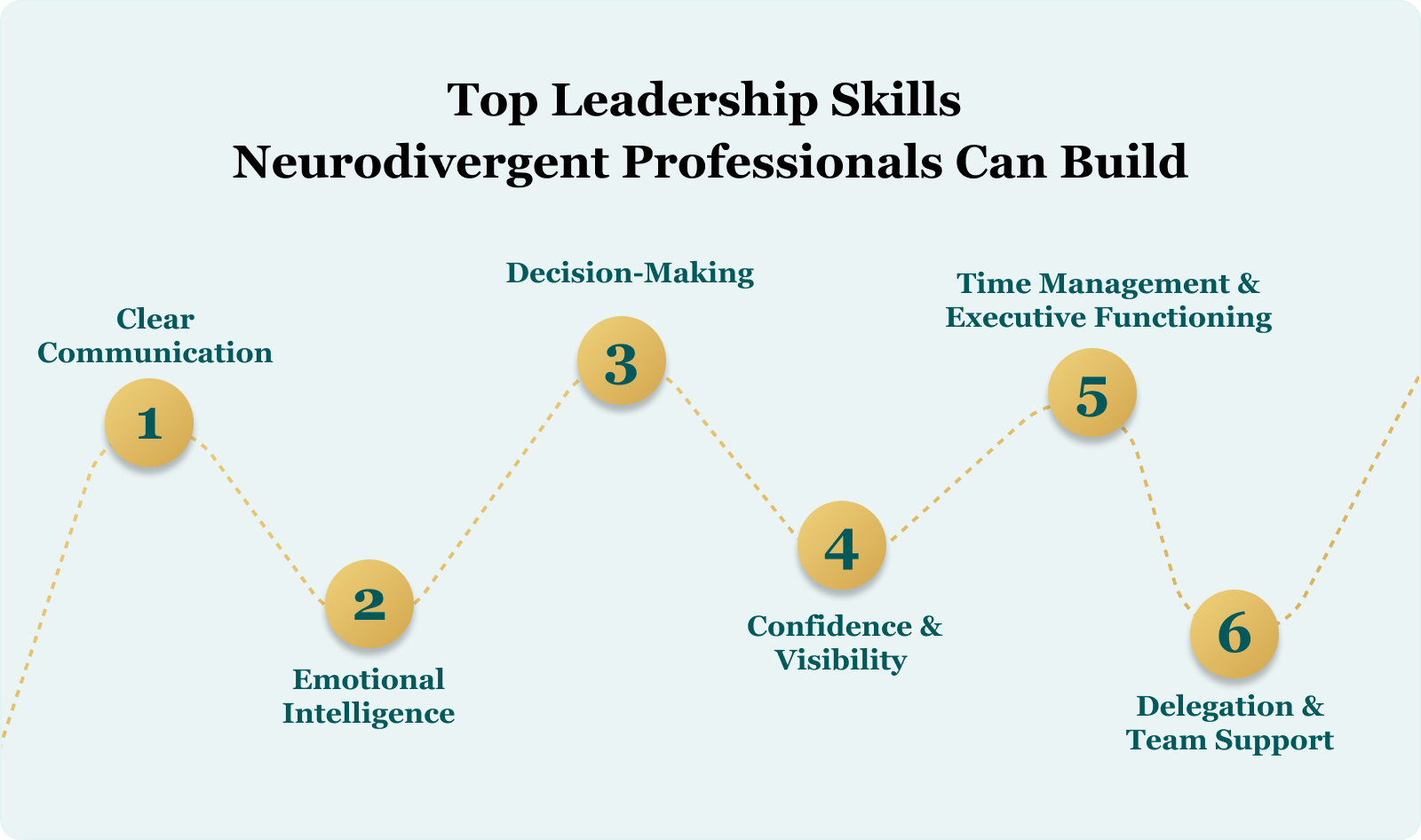
Communication skills for leaders are essential in every workplace. You do not need to be the loudest person in the room. Clear communication means helping others understand priorities, expectations, and next steps.
Ways to improve:
Many neurodivergent professionals communicate exceptionally well when given time to process and structure ideas.
Emotional intelligence at work means recognising emotions in yourself and others, managing reactions, and responding constructively.
You can build this by:
Empathy is a major leadership strength, and many neurodivergent people bring deep care and fairness into teams.
Leaders make decisions with incomplete information. If overthinking slows you down, create a repeatable framework:
This reduces pressure and builds confidence over time.
Workplace confidence does not require pretending to be extroverted. It means trusting your value and letting others see your impact.
Try:
Confidence grows through evidence, not perfection.
Executive functioning strategies help with planning, prioritising, and follow-through.
Useful methods:
Strong systems often outperform raw motivation.
6. Delegation and Team Support
Great leaders do not do everything themselves. Delegation means assigning the right work to the right people while staying accountable.
Practice by:
Supporting others is a core leadership skill at work.
Fast-paced meetings can be draining.
Try:
High masking, overwork, and sensory overload can lead to burnout.
Protect energy by:
Use deadlines, decision frameworks, and “good enough” standards when perfectionism appears.
Be clear, specific, and curious. If something feels unclear, ask questions rather than assuming.
Reduce context switching by grouping similar tasks and protecting focus time.
Many talented professionals believe they are behind when they are actually growing. Keep evidence of wins, positive feedback, and results.
If your goal is career growth for neurodivergent employees, focus on visible value.
1. Become Known for Reliability: Deliver what you promise. Consistency builds leadership trust quickly.
2. Solve Problems Before Being Asked: Notice friction points and propose improvements.
3. Communicate Progress Regularly: Do not assume managers see your effort automatically.
4. Build Relationships Authentically: You do not need to network traditionally. Start with useful conversations and collaboration.
5. Ask for Stretch Opportunities: Volunteer for mentoring, project ownership, or process leadership.
6. Learn to Advocate for Yourself: Promotion tips for neurodivergent professionals often begin with speaking clearly about results, goals, and readiness.
Sometimes talent is not the issue. Strategy, confidence, and support are.
Professional coaching can help you:
If you are autistic and want tailored support, explore Jess Jarmo’s autism job coaching services.
If ADHD affects focus, consistency, or visibility at work, their ADHD career coaching can help.
If you are dyslexic and want support with communication, confidence, or career progression, see dyslexia career coaching.
Leadership is not about acting like someone else. It is about understanding your strengths, building the right systems, and learning how to guide others effectively.
Neurodivergent professionals can become exceptional leaders because they often bring originality, resilience, honesty, empathy, and insight that teams truly need.
If you are ready to grow your career, strengthen your leadership development for professionals, and lead with confidence, visit Jess Jarmo to explore coaching support designed for neurodivergent professionals.
1. Can neurodivergent people be good leaders?
Yes. Many neurodivergent professionals become excellent leaders through creativity, empathy, innovation, integrity, and strong problem-solving.
2. What leadership skills are most important at work?
Communication, decision-making, emotional intelligence, delegation, confidence, and time management are among the most valuable leadership skills at work.
3. How can ADHD professionals improve leadership skills?
ADHD professionals can improve leadership by using structure, prioritisation systems, coaching, clear communication habits, and energy management.
4. Are autistic professionals strong managers?
Yes. Many autistic professionals are strong managers because they bring fairness, consistency, strategic thinking, honesty, and deep expertise.
5. How can coaching help neurodivergent professionals grow?
Coaching helps professionals build confidence, improve communication, manage challenges, prepare for promotion, and lead in ways that suit their strengths.

Founder, CEO & Public Speaker
Jess Jarmo is a neurodivergent career coach with over 18 years of experience in recruitment. She holds a degree in Education and an MBA in Human Resources. She specializes in supporting professionals with ADHD, anxiety, dyslexia, and autism in navigating their careers. Drawing from her own lived experience with dyslexia, ADHD, and anxiety, Jess brings practical, real-world insight to her coaching. As a parent of three neurodivergent children, she is committed to helping individuals grow in ways that align with how they think and work.